Where the Fence Ends: Life in the Villages That Straddle a War They Never Chose
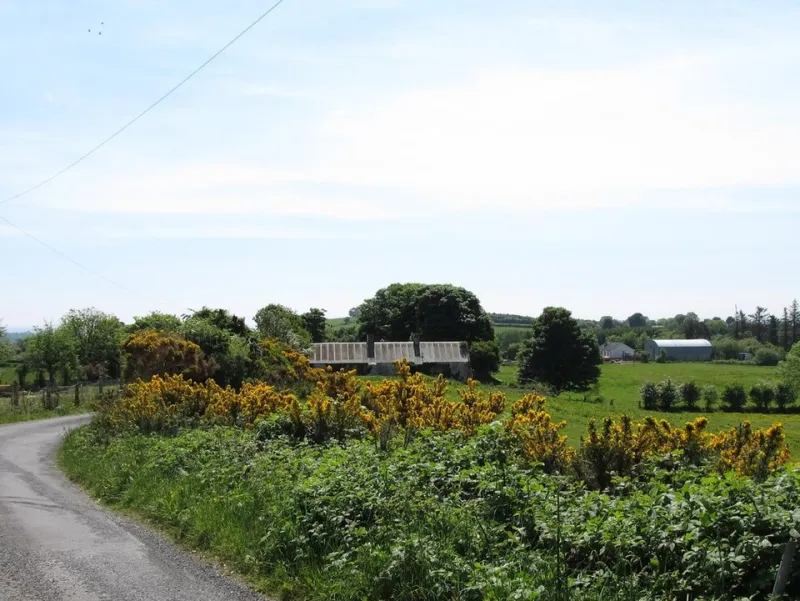
Photo: Eric Jones , CC BY-SA 2.0, via Wikimedia Commons
For most Americans, the Belarus-Ukraine border exists as a thin line on a cable news graphic — a dashed stroke between two countries, one at war and one officially at peace. But for the people who live along that line, the border is not an abstraction. It is a river crossing, a shuttered market, a phone call to a cousin in Chernihiv that takes three attempts and a borrowed SIM card. Theirs is a war experienced through silence, shortage, and the constant hum of uncertainty.
The Market That Vanished Overnight
Before February 2022, border commerce was the lifeblood of villages on both sides of the frontier. Belarusian traders sold dairy, timber products, and household goods across the line; Ukrainian vendors brought back produce, fuel, and — just as important — news. In settlements where a single gas station might anchor the local economy, cross-border traffic was not a luxury. It was payroll.
That traffic stopped almost entirely after the invasion. Crossing points that once processed hundreds of vehicles a day now see a trickle of humanitarian cases and the occasional repatriation. Local economies have responded the way rural economies everywhere do when their main artery is severed: they shrink. Young people leave for Minsk or Gomel, or further still, for Warsaw and beyond. The elderly remain, tending gardens and watching the horizon.
The result is a paradox familiar to students of the American Rust Belt: communities that were already aging and depopulating have now been cut off from the very trade that kept them tethered to a wider world. What remains is subsistence, memory, and rumor.
Families Divided by a Diplomatic Line
Perhaps nothing illustrates the strange limbo of the frontier better than the family networks it has sundered. Intermarriage across the Belarusian-Ukrainian border was common for generations. Grandmothers in the Polesia wetlands have grandchildren on both sides of the line. Weddings, baptisms, and funerals were once occasions for the whole extended family to converge, whatever the passport situation.
Now a funeral in a border village may be attended by mourners who could not cross from the other side. Phone calls require workarounds. Money transfers that once took minutes can take weeks, routed through third countries and informal brokers. The war has not come to these villages in the form of shelling — but it has arrived in the form of absence, the empty chair at the table, the call that doesn't connect.
For American readers, the closest analogue might be families separated along the old Iron Curtain, or Korean families split by the DMZ — except here the separation is barely three years old, and the wounds are raw, and nobody believes the arrangement is permanent.
The Rumor Economy
When official information dries up, speculation fills the vacuum. In the borderlands, that vacuum is profound. Belarusian state media says little about the frontier; Ukrainian media focuses on the active frontlines hundreds of kilometers away. What remains is a dense, fast-moving web of local rumor.
Did you hear about the convoy on the southern road? Was that a drone, or a bird, or nothing at all? Is the crossing reopening next month? A rumor can travel from a village shop to a Viber group chat to a diaspora Facebook page in an afternoon, arriving in the American Midwest before it has been confirmed or denied anywhere else.
This is not mere gossip. In a region where the state controls the official narrative, informal networks have become a parallel information infrastructure — one that villagers, Ukrainian analysts, and even Western intelligence watchers quietly monitor for signals about Minsk's intentions. The borderlands function as an early-warning system, and the villagers know it, even if they rarely say so out loud.
Soldiers at the Edge of the Frame
Both sides have fortified the frontier. Ukrainian engineering units have mined and trench-cut their side of the line; Belarusian forces have staged exercises and repositioned units along theirs. Yet for all this military attention, the villages themselves are largely bystanders — watched over, but not fought over.
Villagers describe a rhythm of small intrusions: the field that is now off-limits because someone dug a trench through it, the forest path closed for 'security reasons,' the checkpoint that adds an hour to a trip to the district hospital. Life adjusts, the way water adjusts to a stone. Nobody plans a life around a checkpoint. One simply routes around it.
What the Borderlands Teach Us
There is a temptation in Washington and Brussels to treat Belarus as a unit — a satellite, a staging ground, a question mark attached to the Kremlin. The border villages complicate that picture. They reveal a country of ordinary people with cousins across a river, grandparents in Ukrainian churchyards, and no appetite for a war that has nonetheless reorganized every corner of their lives.
Understanding Minsk's role in this conflict requires understanding the terrain it governs — not just the rail junctions and the radar installations, but the kitchens where families weigh whether a phone call home is worth the risk. The frontline villages are not strategic assets. They are something rarer: a reminder that behind every dashed line on a map, there are people who never drew it, and who will still be there long after the analysts move on to the next flashpoint.
The war next door has made them witnesses. Whether the wider world ever listens to what they have seen is another question entirely.