Paper Trails and Port Calls: How One Belarusian Cargo Shipment Exposed the Cracks in Western Sanctions
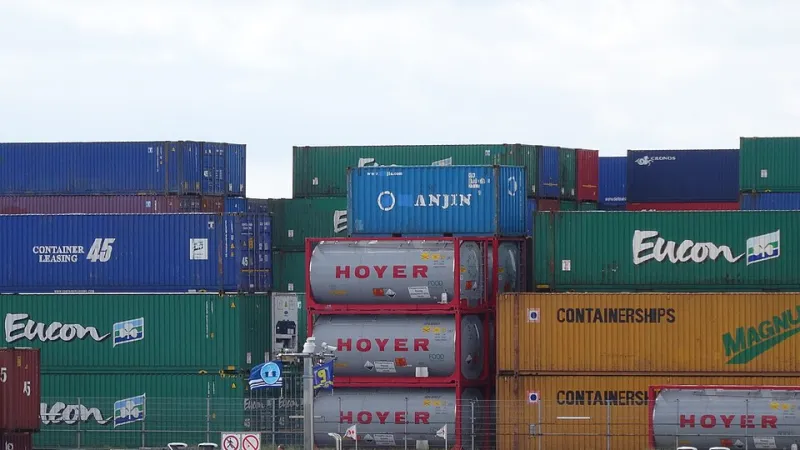
Photo: AgainErick, CC BY-SA 4.0, via Wikimedia Commons
A Container With Three Names
In the spring of 2024, a shipment of birch plywood left a processing plant outside Minsk bound for the Baltic coast. On its customs declaration, the exporter was listed as a Lithuanian trading firm. The buyer of record was a Turkish distributor. The final destination, according to the freight forwarder, was a construction supplier in the United Arab Emirates. Nowhere on the paperwork did the word "Belarus" appear alongside the goods themselves — a feat of administrative creativity, given that the plywood had been milled, graded, and stamped by a state-owned enterprise subject to American and European sanctions.
This is not an anomaly. It is the business model.
Since 2022, Washington and Brussels have layered sanctions on Belarusian state entities with genuine speed — targeting the potash giant Belaruskali, the national flag carrier, defense manufacturers, and a web of banks. Yet the volume of Belarusian exports reaching Western markets has declined far less than the sanctions ledger would suggest. The reason is simple: the goods have learned to travel light, shedding their nationality at the border and reappearing under flags of convenience.
The Rebranding Machine
The mechanics are rarely sophisticated, which is precisely what makes them hard to stop. A Belarusian exporter establishes — or rents — a shell company in a neighboring jurisdiction: Kazakhstan, Armenia, Georgia, Turkey, or a Central Asian republic. That company nominally owns the cargo. Ownership of the underlying Belarusian factory never changes; it merely sits two steps back in the chain, collecting payment through correspondent accounts that themselves often run through third-country banks.
Reflagged vessels perform the same trick at sea. Tankers and bulk carriers carrying Belarusian potash or Russian-derived oil products have swapped registries — from Liberia to the Cook Islands to Gabon in a matter of months — precisely because flag registries can be abandoned faster than sanctions can be enforced. Maritime insurers, when they can be identified at all, are frequently opaque outfits registered in jurisdictions with little appetite for due diligence.
Then there is the paperwork itself. Certificates of origin can be forged, backdated, or simply issued by customs authorities in transit countries that have no incentive to scrutinize them. A container of Belarusian timber becomes "Kazakhstani timber" on the strength of a single stamp. Western importers, facing their own compliance deadlines, often accept the documents at face value — because the alternative is a costly audit of a supply chain designed to defeat exactly that audit.
Why the United States Feels This Differently
For American readers accustomed to thinking of sanctions as a lever with real economic bite, the Belarusian case is instructive — and sobering. The US market absorbs a small fraction of Belarusian exports compared to the European Union, but American policy shapes the global standard. When loopholes persist, they are not merely a Belarusian problem; they are a demonstration to every sanctioned state, from Caracas to Pyongyang, that evasion is a survivable, even profitable, strategy.
The stakes are also directly tied to the war next door. Sanctions on Minsk exist, at their core, to constrain the material and financial support flowing from Belarusian state coffers toward Russia's invasion of Ukraine. Every ton of potash that slips through under borrowed paperwork is revenue that reaches the same budget that underwrites Belarus's role as a staging ground and logistics platform for Russian forces.
Where the System Leaks
Three pressure points deserve particular attention from US policymakers:
First, the intermediaries. Sanctions target the Belarusian entity, but the trading houses, freight forwarders, and flag registries that enable evasion are largely untouched. Secondary sanctions — the threat of cutting third-country firms off from the US financial system — remain inconsistently applied, and enforcement against mid-sized traders in jurisdictions like Turkey or the UAE is slow and politically fraught.
Second, the insurance layer. No ship moves far without coverage. Tightening scrutiny of marine insurers and requiring verified beneficial-ownership disclosure would make reflagging materially riskier. This is a domain where US financial leverage is unmatched.
Third, the importers themselves. American and European companies buying timber, fertilizers, and industrial components need clearer legal liability for provenance failures. Voluntary due-diligence guidance has proven insufficient; the compliance departments of mid-sized importers respond to liability, not to memos.
Closing the Gap
None of this argues that sanctions on Belarus have failed outright. Export revenues have fallen substantially from pre-war levels, and the costs of evasion — discounted prices, longer routes, unreliable financing — are real. But the shipment that left that mill outside Minsk arrived somewhere in the West regardless, wearing paperwork that no serious enforcement regime should accept.
The broader lesson for Washington is architectural. Sanctions written for a world of direct trade are being tested by a world of layered intermediaries. Closing that gap requires the same patient, unglamorous work the United States has applied to Iranian oil and Russian shadow-fleet tankers: sustained secondary-sanctions pressure, coordinated action with allies on flag registries and insurers, and a willingness to penalize the enablers, not just the principals.
Belarus's role in the war next door is sustained by money. As long as a container can carry three names and still reach a Western port, that money will keep flowing — and Minsk will keep drawing on it.