The Forgotten File: How a Small Diaspora Is Trying to Put Belarus on Washington's Desk
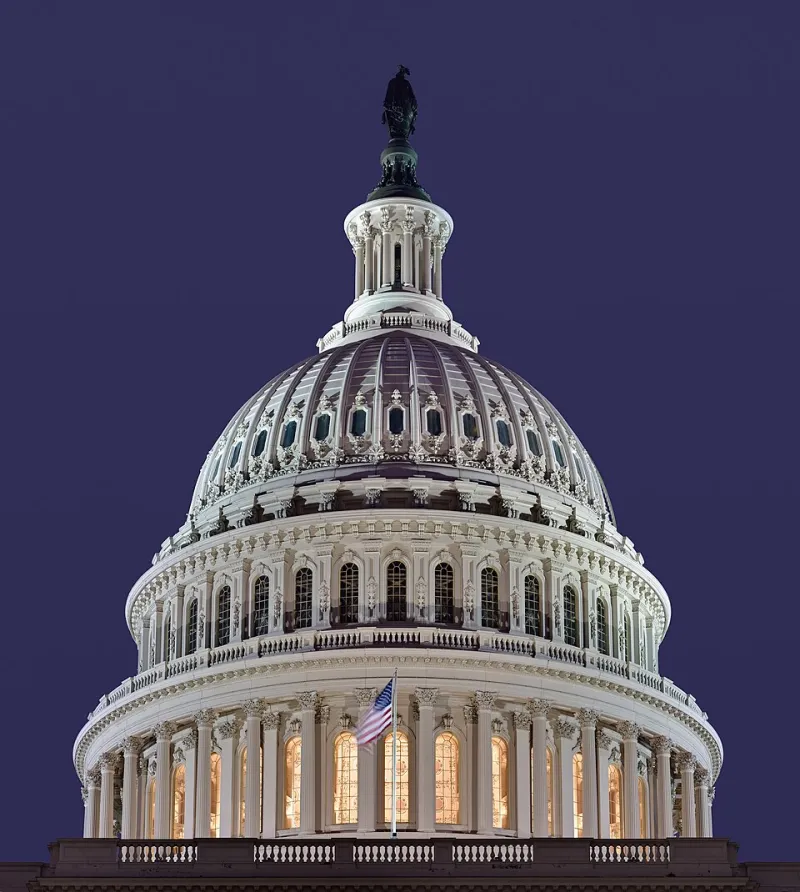
Photo: Diliff, CC BY 2.5, via Wikimedia Commons
In the hierarchy of foreign policy concerns that compete for attention on Capitol Hill, Belarus occupies an uncomfortable position: too entangled in the Ukraine war to ignore, too small and too opaque to command a constituency. The result, as one longtime diaspora activist puts it, is that Minsk has become "the forgotten file" — a folder that keeps getting moved to the bottom of the pile.
A handful of Belarusian Americans are trying to move it back to the top.
A Community Built in Chicago's Shadow
The heart of Belarusian America beats on the South Side of Chicago, where St. Cyril of Turov Belarusian Orthodox Church has anchored the community since the 1970s. It is a modest footprint by the standards of American immigration — perhaps 50,000 to 100,000 people nationally by most estimates, many concentrated in Illinois, New Jersey, and the Washington suburbs of Northern Virginia.
For decades, that smallness bred political quietism. The post-1994 generation of arrivals came for economic reasons, not political ones, and the community's institutional life revolved around Saturday schools, folk ensembles, and church picnics rather than lobbying.
The 2020 presidential election shattered that equilibrium. The contested reelection of Alexander Lukashenko, the mass protests that followed, and the brutal crackdown that extinguished them sent a new wave of émigrés westward — younger, urban, politically radicalized by experience, and fluent in the vocabulary of American advocacy.
From Weekend School to Working the Hill
That generational turnover is visible in the community's changed posture. Where the old diaspora wrote letters to the editor, the new one books congressional appointments.
Organizations such as the Belarusian American Caucus — a loose coalition of activists, professionals, and 2020-era exiles — have made a practice of briefing staff on the Senate Foreign Relations and House Foreign Affairs committees. Their agenda is narrow and pragmatic: sustaining sanctions pressure on Minsk's regime and its state-owned industrial base, protecting Temporary Protected Status and asylum pathways for Belarusians fleeing conscription or political persecution, and ensuring that any Ukraine-related legislation doesn't treat Belarus as an afterthought.
The TPS fight illustrates the stakes. When the Biden administration designated Belarus for Temporary Protected Status in late 2023, it gave several thousand Belarusians a reprieve from deportation — a decision the diaspora lobbied for quietly but intensely, and one advocates now scramble to defend amid broader immigration politics that make small-country designations politically awkward.
Sanctions policy offers a second front. Diaspora experts have fed research to congressional offices examining how Belarusian exports — potash, tires, machinery — continue reaching global markets through Russian intermediaries and third-country re-routing. It is unglamorous work, closer to accounting than activism, but it is the kind of granular expertise that congressional staff actually use.
Why the File Keeps Getting Lost
The diaspora's challenge is structural, not personal. Ukraine has a war, a compelling narrative, and a lobby apparatus built over decades. Belarus has a dictatorship that has, so far, stopped short of direct combat — which means Belarus policy in Washington is almost always a subset of Ukraine policy, argued by Ukraine hands, in Ukraine terms.
There is also a recognition problem. American policymakers can name Belarusian opposition figures like Sviatlana Tsikhanouskaya, but the country itself has no natural constituency: no strategic lobby, no major donor class, no domestic political payoff for engagement. A congressional aide who works on the region, speaking on background, put it bluntly: "Belarus comes up when it's attached to something bigger. On its own, it's a briefing memo nobody requests."
The diaspora's counterargument is that this framing gets the threat exactly backwards. Belarusian territory hosted Russian forces during the February 2022 invasion; it hosts Russian nuclear-capable aircraft and, by Minsk's own admission, Russian tactical nuclear weapons. A regime that has surrendered that much sovereignty is not a sideshow to European security — it is a vector for it.
The Long Game
No one in the community pretends that a few hundred thousand people will transform American strategy toward Minsk. The realistic ambition is narrower: that when the next Belarus moment arrives — a succession crisis in Minsk, a Russian move to absorb its client, a new refugee flow — there will be staff on the Hill who know the file, experts who can testify, and a community that can speak for a country that cannot speak for itself.
That is a modest goal. But for a diaspora that watched its homeland's democratic moment die on camera in 2020, modest goals are the only honest ones left. The war next door made Belarus impossible to ignore; the task now is making it impossible to forget.