Silence as Strategy: Life Along the Deadest Border in Europe
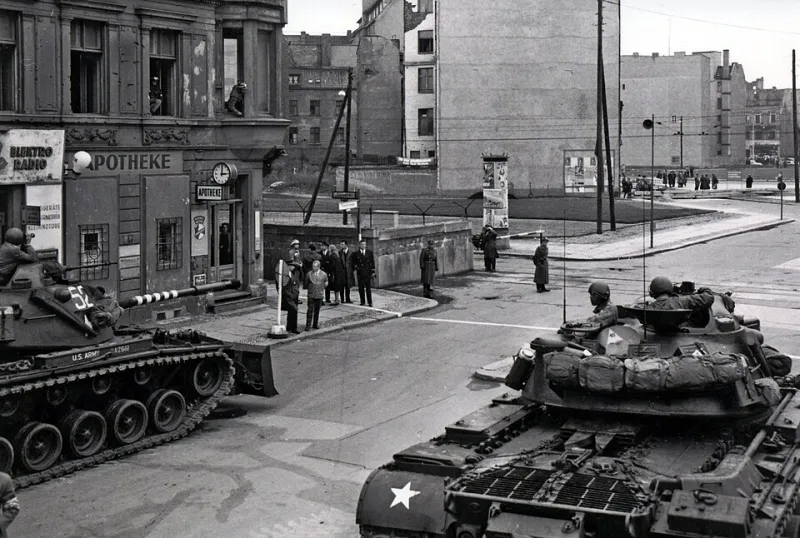
Photo: unknown, U.S. ARMY PHOTO, Public domain, via Wikimedia Commons
Stand at most of Ukraine's international borders today and you will hear a familiar soundtrack: idling trucks, stamping passports, the clatter of freight being logged and moved. Drive north from Kyiv toward Belarus, and the soundtrack stops. Since February 2022, the roughly 1,000-kilometer frontier between Ukraine and Belarus has functioned as something Europe has not seen since the Cold War's tensest years — a long, deliberate, almost totally sealed quiet.
It is easy to mistake that quiet for irrelevance. It is anything but.
A Line That Almost Nobody Crosses
Before the full-scale invasion, the Ukrainian-Belarusian border was a working frontier. Goods moved. Families visited. Cross-border commerce between the Chernihiv region and Gomel oblast was unremarkable, the sort of traffic that defines ordinary neighborly relations across the continent.
Today, every crossing but a handful is shuttered. Ukrainian border guards man fortified positions behind minefields and anti-vehicle ditches. On the Belarusian side, Minsk has pulled much of its own manpower back from the line, relying on electronic monitoring rather than boots. The result is a border that is simultaneously heavily surveilled and nearly empty — a paradox that has no real parallel in the rest of Europe.
Compare it to Ukraine's western frontier with Poland, where millions of crossings have been logged since 2022, or the southern lines where grain and cargo flow under wartime conditions. The Belarusian border is the outlier: a frontier defined by what does not move through it.
Why the Emptiness Matters
The first reason the sealed border matters is military. For NATO planners in Brussels and at Supreme Headquarters Allied Powers Europe, the question is never whether the border is quiet, but whether it will stay that way. Russian forces used Belarusian territory as a staging ground for the failed push toward Kyiv in 2022. The memory of that thrust shapes allied war-gaming to this day, and the Suwalki Gap — the narrow corridor between Kaliningrad and Belarus that links the Baltic states to the rest of NATO — sits a few hundred miles to the north.
A quiet border lets alliance planners focus elsewhere. A noisy one would force an immediate recalculation of Europe's entire defensive posture. In that sense, the silence is itself a strategic asset that Washington has a stake in preserving.
The second reason is political, and it lands squarely in Warsaw. Poland has spent the past several years fortifying its border with Belarus — first against a manufactured migration crisis engineered by Minsk in 2021, then against the broader instability that followed the invasion. The Polish border wall, surveillance towers, and expanded border guard forces were all designed with a Belarusian problem in mind. Ukrainian officials' concerns about their own northern flank, and Polish officials' concerns about theirs, are two halves of the same security conversation — one that increasingly involves American equipment, American intelligence sharing, and American money.
The Sensor War Nobody Sees
What has replaced human traffic along the Ukrainian-Belarusian line is technology. Kyiv has invested heavily in a layered surveillance network along the frontier: ground sensors, aerostats, drones, and acoustic monitoring designed to detect any movement — a probing raid, a sabotage team, a repeat of 2022 — with as much warning as possible.
The Belarusian side runs its own electronic net, and the two systems stare at each other across farmland, forest, and the radioactive exclusion zone around Chernobyl, which sits astride the border and adds a strange environmental no-go zone to an already strange frontier.
For American audiences, the closest analogy is the old inner-German border of the Cold War — a strip of land so heavily instrumented that its emptiness was the point. The difference is that this one exists in the middle of an active war, between two states that have not formally declared one.
What Washington Should Watch
Three developments along this quiet frontier would change the picture quickly.
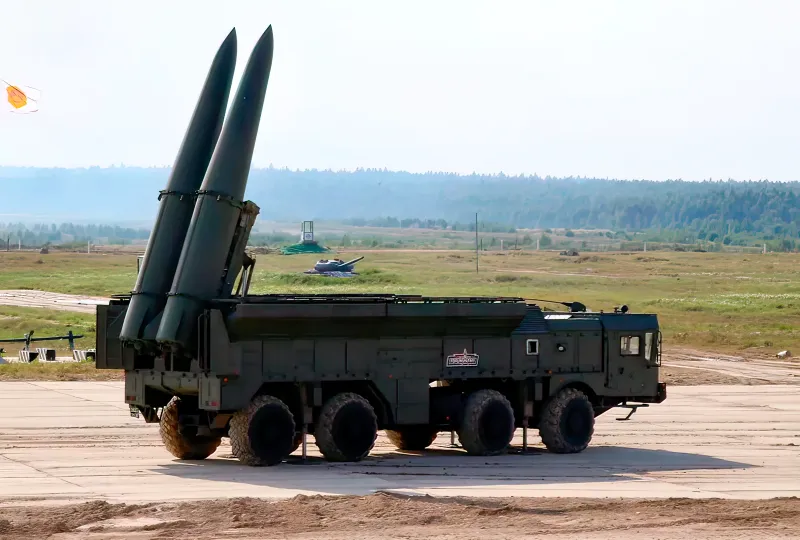
First, any sign of Russian forces returning to Belarusian territory in meaningful numbers — beyond the training rotations and deployed tactical systems Minsk already hosts. Second, any loosening of border restrictions that suggests Kyiv and Minsk are testing a diplomatic thaw; a reopened crossing would say as much about ceasefire diplomacy as any communiqué. Third, a spike in sabotage or hybrid incidents along the Polish-Belarusian border, which could serve as a pressure valve or a provocation depending on Minsk's and Moscow's aims.
The paradox of Europe's deadest border is that its stillness is conditional, negotiated in effect between a Belarusian strongman's caution and Ukraine's vigilance. It hums not with trade, but with tension — and for the Pentagon, NATO headquarters, and policymakers on Capitol Hill, that hum is worth listening to closely.