Silicon Backdoor: Tracing the Microchip Pipeline That Runs Through Gomel
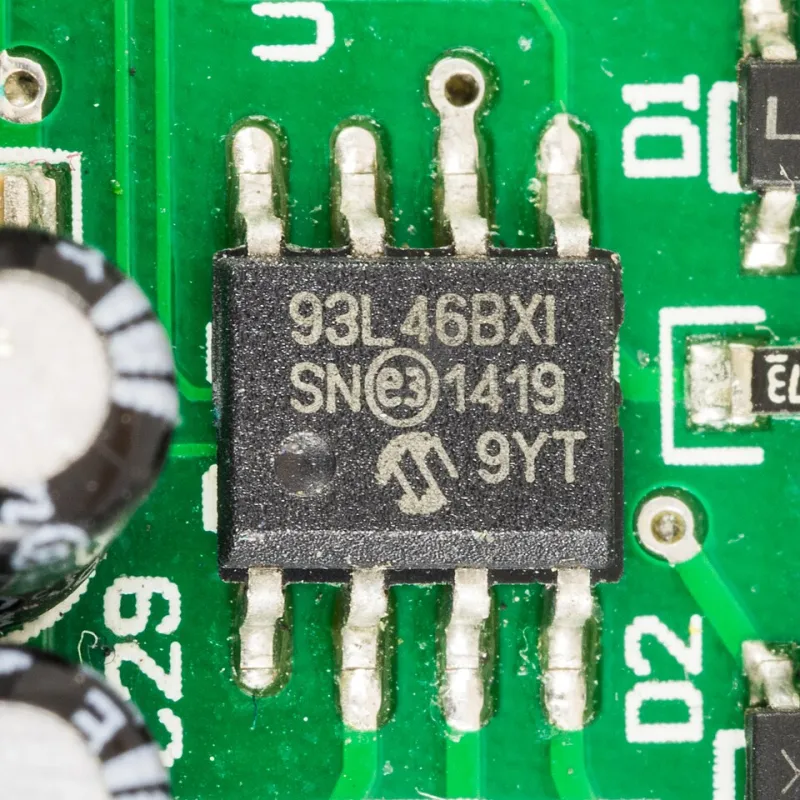
Photo: Raimond Spekking, CC BY-SA 4.0, via Wikimedia Commons
When American policymakers discuss sanctions evasion in the war against Ukraine, the conversation tends to orbit two hubs: the Caspian transshipment routes into Russia and the gray-market brokers operating out of Hong Kong and the UAE. Belarus, when it appears at all, is usually a footnote — a country whose own defense industry was sanctioned early and often.
That framing has a blind spot. Trade data, customs records reviewed by researchers, and reporting from regional investigators point to a quieter role: Belarus as a transit corridor for dual-use microchips moving toward Russian defense manufacturers. For a site dedicated to tracking Minsk's fingerprints on this war, the gap matters. A supply chain that runs through Gomel or Brest is a Belarusian story, even when the chips were made in Taiwan and the buyer is in Voronezh.
The Route Nobody Photographs
Semiconductors are, by weight, almost nothing. A shipment of Western-made microcontrollers worth millions can fit inside a single pallet, which makes them uniquely suited to the kind of small-scale, repeated crossings that border authorities struggle to police. Investigators and export-control analysts have documented patterns in which goods declared for Belarusian buyers — often trading companies with no visible electronics business — reappear weeks later in Russian customs data or on the battlefield, in the guidance modules of drones and the circuitry of precision munitions.
The logic of the route is straightforward. Direct rail and trucking links between Belarus and Russia operate largely outside meaningful inspection. The Union State framework between the two countries erases most customs friction, and Belarusian authorities have shown little appetite for scrutinizing cargo heading east. A chip that enters Minsk under one set of paperwork can cross into Smolensk as, effectively, a domestic transfer.
The Loopholes Doing the Heavy Lifting
Three gaps recur in the analysis. First, the jurisdictional one: American export controls restrict re-export of controlled technology, but enforcement depends on detecting the transfer — and once a component is inside Belarus's customs territory, US authorities have no inspectors on the ground and limited visibility into what happens next.
Second, the end-user problem. Shell trading firms with thin documentation, generic names, and addresses that turn out to be apartment blocks have proven adept at passing screening checks. US enforcement actions in recent years have named dozens of such intermediaries in Russia and third countries; the Belarusian equivalents remain under-examined, partly because the Commerce Department's entity lists have historically focused elsewhere.
Third, there's the thresholds question. Many chips that end up in Russian weapons are consumer-grade components — the same microcontrollers found in a washing machine or a car — that were never intended to be restricted individually. Controlling them means policing volume and destination, not the item itself, which is a far harder game.
What Washington Knows
American agencies are not oblivious. The Treasury Department has sanctioned Belarusian entities for supporting Russia's military-industrial complex, and the Commerce Department has repeatedly warned that Belarus is treated, for export-control purposes, as an extension of Russia — meaning a license is required to send even many uncontrolled items there. That rule, imposed in 2022, was among the most aggressive moves of the early sanctions period.
The problem is follow-through. Enforcement resources are finite, prosecutions take years, and the cases that generate headlines tend to involve dramatic schemes — third-country brokers, falsified manifests, seized cargo in the Baltics. The Belarusian transit leg, by contrast, happens inside a closed political system with no independent press to audit it and no cooperation with US investigators. What cannot be documented is difficult to prosecute.
Why Minsk Stays Off the Radar
There is also a strategic convenience to the omission. Washington's Belarus policy has been built around a narrow set of goals: keeping Minsk from entering the war directly, preserving space for a post-Lukashenko transition, and avoiding escalation. Transshipment networks are, in that calculus, a nuisance rather than a threat — worth designating an entity or two, but not worth a confrontation that might push Minsk closer to Moscow's war economy.
Critics argue the trade-off is shortsighted. Every guidance module that reaches a Russian strike drone, wherever it transits, extends the war that Ukrainian cities absorb nightly. And a Belarus that profits — even modestly — from logistics, banking fees, and brokerage margins has one more stake in the conflict's continuation. Sanctions policy that ignores the corridor is not neutral; it subsidizes it.
The View From Kyiv — and From Gomel
Ukrainian officials have pressed this point for months, arguing that Belarus's role in the sanctions-evasion economy deserves the same scrutiny as its hosting of Russian forces. Their American counterparts, for now, prefer the quieter approach.
The irony is that the pipeline's dependence on Belarusian territory is also a vulnerability. Transit routes can be mapped; trading companies can be named; the handful of banks and freight forwarders that handle the cargo can be cut off. None of that requires a policy revolution — only the same enforcement energy Washington has applied to Russian shadow-fleet tankers and Asian intermediaries.
Until it happens, the chips will keep moving. Small, light, and nearly invisible, they cross a border that nobody is watching closely — and land, eventually, where the war is.