Barges, Backwaters, and Blind Spots: The River Trade Slipping Past Sanctions
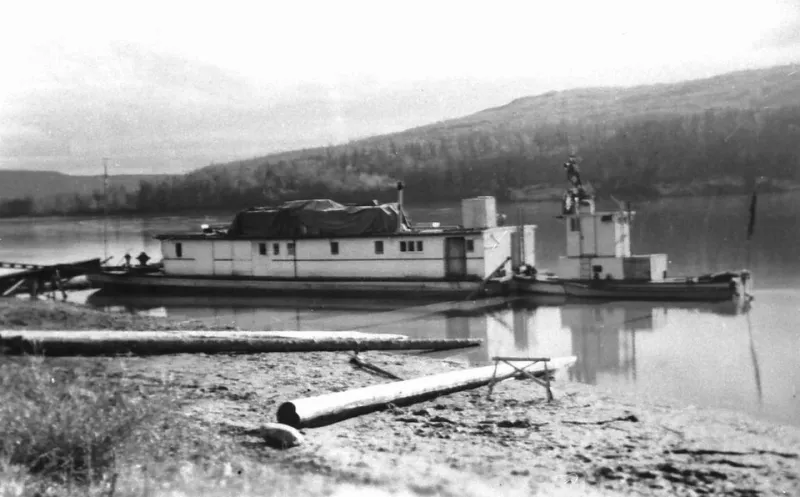
Photo: Unknown authorUnknown author, Public domain, via Wikimedia Commons
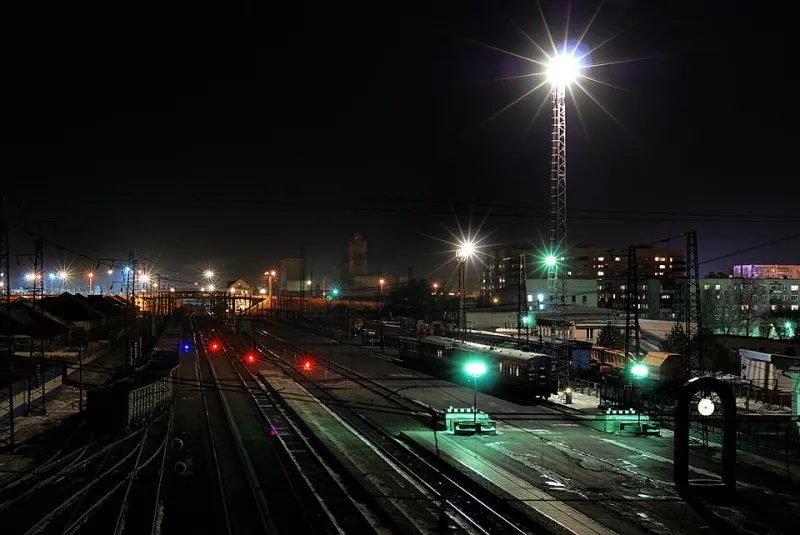
When American policymakers talk about squeezing Belarus's economy, the conversation almost invariably turns to rail. The freight yards at Brest, the rolling stock, the sanctions designations against Belaruskali and its fertilizer exports — these are the familiar instruments. What rarely enters the discussion is the network of rivers and canals that has connected Belarus to the Baltic and the Black Sea for centuries, and which today carries cargo with remarkably little outside scrutiny.
That oversight deserves attention. If Minsk and Moscow look for ways to keep dual-use goods flowing and revenue moving, the water route is an obvious place to try.
A Network Built for Empire, Still Fit for Cargo
Belarus's river system is a legacy of imperial engineering. The Dnieper–Bug Canal, completed in the 1780s under the Polish-Lithuanian Commonwealth and expanded by the Russian Empire, links the Black Sea basin to the Baltic via the Pripyat and Mukhavets rivers. The Dnieper itself flows south from Russian territory through Belarus and into Ukraine, past Chernobyl's exclusion zone and down to Kyiv.
In the Soviet era, these waterways moved timber, grain, and industrial freight in volumes that would be unrecognizable today. But the infrastructure — locks, dredged channels, river ports at Pinsk, Mozyr, and Rechitsa — remains. With modest investment, it could carry substantially more than it does now.
Why Water Escapes the Watchlist
The enforcement architecture that Washington and Brussels have built since 2022 was designed around the chokepoints everyone understands: land border crossings, rail gauges, and maritime ports. Customs cooperation with neighboring EU states, satellite monitoring of rail yards, and the G7 price cap on seaborne oil all target these visible arteries.
River traffic fits none of these categories neatly. Barges are small, numerous, and slow. They can load at modest river terminals that lack the AIS transponder coverage and port infrastructure of Gdansk or Odesa. Transshipment at river junctions is harder to attribute than a container moving through a major seaport. And unlike a sanctioned tanker, a fertilizer barge is indistinguishable from a hundred legitimate ones without inspection.
American readers can think of it this way: enforcing sanctions on river trade today is roughly where maritime enforcement stood a decade ago, before the shadow-fleet problem forced governments to build real monitoring capacity.
What Could Move, and Why It Matters
The plausible scenarios are not exotic. Potash and other fertilizers remain Belarus's most valuable export and the target of the most significant US sanctions on the country. If traditional routes tighten further, barge shipments to Black Sea ports — or transshipment through Russian river systems to Baltic terminals — offer redundancy that rail cannot match once tracks are watched.
More concerning for security planners is the dual-use dimension. River barges routinely carry machinery, chemicals, and electronics components. Microelectronics and machine tools moving by water would attract none of the attention that the same cargo draws at a road crossing into Poland or Lithuania. Ukraine, which shares the Dnieper and the Pripyat basin with Belarus, has direct stakes in whether its northern neighbor's waterways become a logistics workaround.
There is also a military overlay that cannot be ignored. The Pripyat River and its marshlands form the natural boundary between Belarus and Ukraine — the same terrain that Russian forces probed in the war's opening weeks. Increased civilian barge traffic on these rivers would complicate Ukrainian monitoring of the border zone, whether or not the cargo itself is problematic.
What Washington Should Do
Three steps would close much of the gap. First, the Treasury and State Departments should include river and canal infrastructure operators in future sanctions designations, as they have done with rail operators. The Dnieper–Bug Canal's management and Belarusian river shipping companies are not currently household names in enforcement actions.
Second, the US should press allies with riverine expertise — the Netherlands and Belgium, whose inland waterway monitoring is among the world's most sophisticated — to share best practices with EU border states on the Baltic and Black Sea approaches.
Third, satellite and commercial imagery providers used by US agencies should be tasked with routine monitoring of key river terminals, much as rail yards are now. The cost is modest; the deterrence value is not.
The Pattern to Break
Belarus's role in this war has been defined by Minsk's ability to stay just below the threshold that triggers decisive action. Sanctions enforcement risks repeating that pattern on the water: ignoring a route until it becomes a problem, then scrambling to respond. The rivers have carried empires' cargo for two centuries. There is no reason they cannot quietly carry sanctioned goods next year — unless Washington decides, early enough, to watch the water as closely as it watches the rails.