Sanctions, Shadow Fleets, and a One-Way Street: Inside Belarus's Rewired Economy
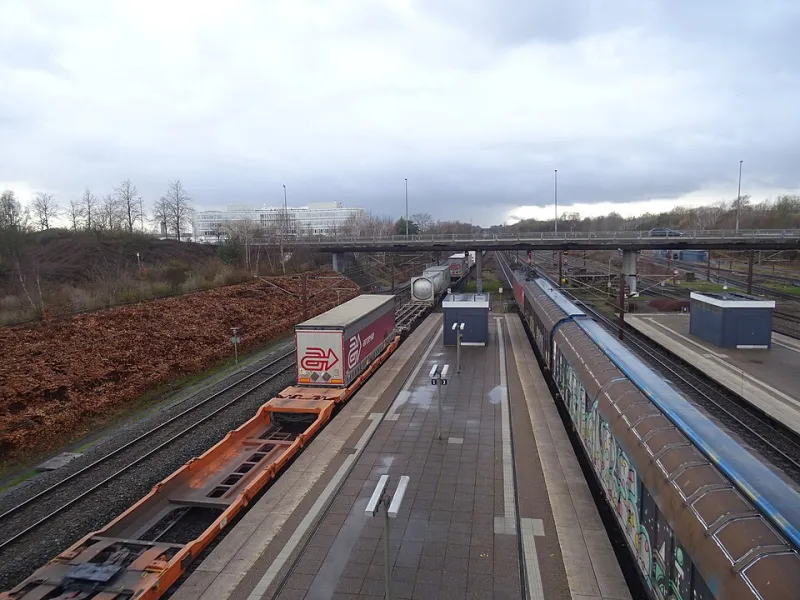
Photo: Leif Jørgensen, CC BY-SA 4.0, via Wikimedia Commons
When Western governments unveiled their first packages of sanctions against Belarus in the weeks after February 2022, the stated aim was straightforward: pressure Minsk into distancing itself from Russia's invasion and make the costs of complicity unbearable. Nearly three years on, the results are more complicated than either hawks or skeptics predicted. Belarus's economy has not buckled. But it has been fundamentally rewired — and the rewiring runs in one direction only.
The Great Rerouting
Before the war, Belarus was a genuinely European trading nation. Roughly half of its exports flowed west: refined petroleum products through Baltic ports such as Klaipeda, potash fertilizer to agricultural buyers across the Americas and Asia, heavy trucks and tractors to European dealerships, IT services out of the Minsk High-Tech Park. American farmers, directly or indirectly, were among the consumers of Belarusian potash through global fertilizer markets.
Sanctions severed those arteries. The European Union closed its ports to Belarusian cargo. The United States and EU sanctioned Belaruskali and Belneftekhim, the state giants at the heart of the export economy. Swedish and German manufacturers pulled out of joint ventures. What followed was not economic death but economic surgery — a forced transplant of Belarus's entire trade circulatory system onto Russian infrastructure.
Oil that once arrived through Baltic pipelines now comes almost exclusively from Russian ports. Potash that cannot reach Western buyers moves east, often through Russian logistics chains or, according to multiple investigative reports, through shadow intermediaries re-registering cargo in third countries. Belarusian tractors and trucks that once carried EU certification now seek markets in Central Asia, Africa, and Latin America, frequently financed by Russian credit lines.
The Dependency Ledger
The numbers tell the story plainly. Russia now accounts for the overwhelming majority of Belarusian foreign trade — by some estimates approaching 90 percent when transit, energy, and credit arrangements are included. Moscow provides subsidized energy supplies, refinanced sovereign debt, and loans that Minsk could not raise on any open market. In exchange, Belarus has ceded degrees of sovereignty that would have been unthinkable a decade ago: joint military exercises on its territory, the basing of Russian tactical aircraft, and a Union State integration process that has accelerated from talking point to operational reality.
For American readers, the closest analogy might be a company that loses all its customers except one — and that single customer happens to be its largest creditor, its sole supplier, and its landlord. Negotiating leverage in such an arrangement is not degraded gradually. It evaporates.
Is Pressure Working — or Backfiring?
Here is the uncomfortable question policymakers in Washington should sit with: has economic strangulation deterred Alexander Lukashenko, or has it simply tightened Moscow's grip on him?
The case for deterrence rests on the fact that Belarusian forces have not directly entered the war. Lukashenko has repeatedly drawn distinctions — allowing Russian forces to use Belarusian territory in February 2022, hosting them for exercises, but refusing to send Belarusian troops across the border. Some analysts argue that fear of sanctions escalation, and of losing what remains of his economic base, is one reason he has kept that red line intact.
The case against is starker. Every sanction round has made Minsk more dependent on Moscow, not less. The Lukashenko who in 2020 could play East against West — courting Chinese investment, flirting with Western lenders after Russian pressure — no longer exists. The Lukashenko of 2025 is a man whose survival is guaranteed by the Kremlin and priced in Russian rubles. If Vladimir Putin ordered Belarusian forces into Ukraine tomorrow, what economic leverage would remain for the West to threaten? Marginal, at best.
What It Means for US Policy
This is not an argument for lifting sanctions; the human rights record in Belarus, with hundreds of political prisoners still behind bars, forecloses that conversation for now. But it is an argument for precision. Broad sectoral pressure that simply pushes all Belarusian trade into Russian channels may achieve less than targeted measures that leave Minsk with something to lose — and something to negotiate for.
The Biden administration's approach of pairing sanctions with carve-outs for agricultural shipments was a small step in this direction. A future administration should think harder about the endgame: if the goal is a Belarus that is less, not more, of a Russian appendage, then the sanctions architecture should be designed to reward distance from Moscow, not merely to punish proximity.
Follow the money, the old investigative maxim goes. In Belarus, the money now leads to one place — and until Western policy changes that trajectory, Minsk's choices will not be its own.