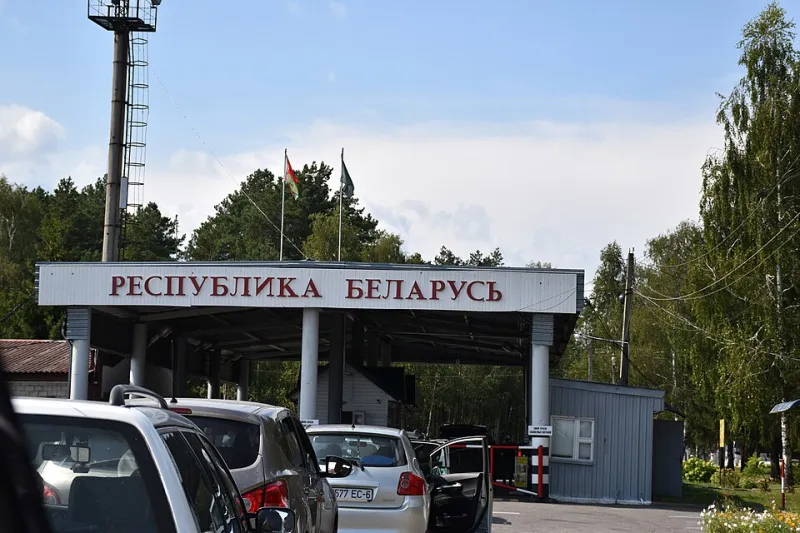
Between Patron and Peril: Rethinking Minsk's Calculus in the Russia-Ukraine War
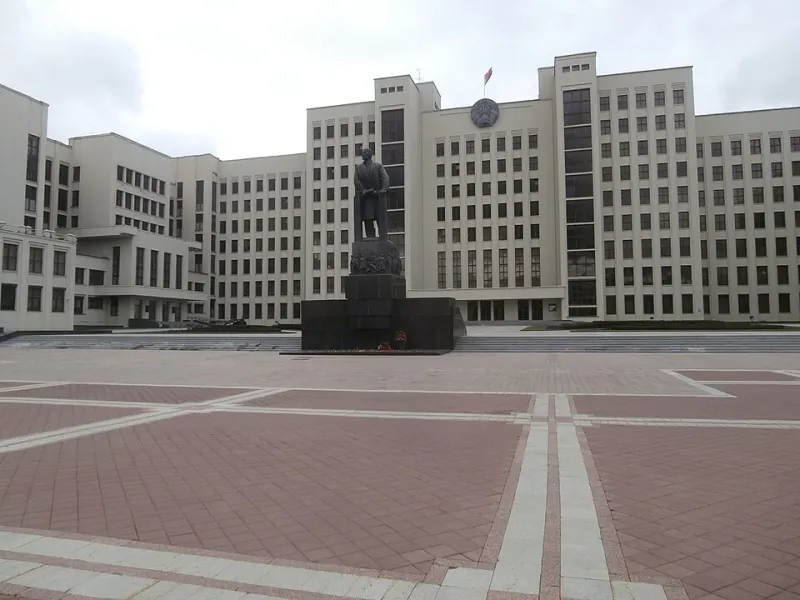
Photo: Pjotr Mahhonin, CC BY-SA 4.0, via Wikimedia Commons
For nearly three years, the default framing in Washington has been straightforward: Belarus is Russia's satellite, its territory a staging ground for the February 2022 invasion, its leadership an appendage of the Kremlin's war machine. That framing is convenient. It is also, in important respects, incomplete.
A more careful reading of Alexander Lukashenko's conduct since the full-scale invasion began suggests a leader engaged in a continuous, high-stakes balancing act — one driven less by loyalty to Moscow than by a cold-eyed assessment of what keeps his regime alive. For US policymakers weighing sanctions relief, deterrence posture, and diplomatic back channels, that distinction matters.
The Survivor's Playbook
Consider what Lukashenko has actually done — and not done — since February 2022. He permitted Russian forces to use Belarusian territory as a launch point for the assault on Kyiv. He has hosted Russian tactical nuclear weapons under the framework of the Union State. He has echoed Kremlin talking points about NATO expansion with monotonous regularity.
Yet Belarusian troops have never crossed the border into Ukraine. Lukashenko has, at moments, publicly distanced himself from aspects of the war — at one point denying that Belarusian territory was being used for strikes, even as evidence suggested otherwise. He has hosted talks, floated peace initiatives, and positioned himself, however implausibly, as a potential mediator.
This is not the behavior of a puppet. It is the behavior of a gambler who understands that going all-in on Russia's war could cost him his chips — and his table.
Why Lukashenko Won't Fully Commit
Three structural realities constrain Minsk's options, and each carries implications for US strategy.
First, regime survival. Belarus's security forces brutally suppressed domestic protest in 2020, and Lukashenko knows his legitimacy rests on a thin foundation. Committing the Belarusian army — an institution whose loyalty in combat conditions is uncertain — to a grinding, unpopular war could shatter that foundation. Desertion, mutiny, and a second wave of unrest are scenarios Minsk's planners lose sleep over.
Second, economic dependence cuts both ways. Yes, Belarus relies on Russian energy subsidies, loan rollovers, and market access. But Moscow's leverage is not unlimited. Russia needs Belarus's geography, its defense-industrial base, and its stability. If Lukashenko's regime collapsed in chaos, the Kremlin would face a crisis on its western flank — a fact Lukashenko understands and quietly exploits.
Third, the lesson of the battlefield. Russia's failure to take Kyiv in the war's opening weeks demonstrated that Ukraine's defense is formidable. A Belarusian entry into the war would invite strikes on Minsk, potentially drag NATO's eastern flank politics into sharper relief, and offer Lukashenko no upside that he cannot currently obtain by hosting Russian forces and supplying logistics.
What This Means for Washington
The current US sanctions regime — which has hit Belarus's potash exports, petroleum products, and key industrial sectors — has been justified largely by Minsk's enabling role in the invasion. That rationale remains sound. But the calibration question is worth revisiting.
If the goal is to deter Belarusian entry into the war, sanctions should be structured to make escalation costlier while preserving a clear, credible off-ramp: stay out of the fighting, and the pressure can be managed. If the goal is to wean Minsk from Moscow's orbit over the long term, then Washington needs channels — even thin ones — through which incentives can eventually be communicated. Total isolation cedes the relationship entirely to Beijing and Moscow, both of which have expanded their Belarusian footprint as Western firms exited.
There is also a deterrence messaging component. US officials have repeatedly and publicly warned against Belarusian entry into the war. That clarity has arguably worked. It should be maintained, but paired with quiet diplomatic signaling that Washington reads Lukashenko's constraints accurately — because an actor who believes he is being treated as a rational balancer has more room to keep balancing.
The Risk of Getting It Wrong
None of this should be mistaken for sympathy toward a dictator who rigged elections, jailed opponents, and facilitated an invasion. It is an argument for analytical precision. If US policy treats Belarus as a locked component of the Russian war machine, it will miss the moments when Minsk's self-interest can be leveraged — and it may overreact to provocations that are, in fact, Lukashenko performing loyalty for Moscow's benefit rather than crossing genuine red lines.
The war next door will eventually end, in one form or another. When it does, the question of Belarus's orientation — toward Moscow, toward Beijing, or toward a genuinely independent path — will shape Central and Eastern European security for a generation. American policymakers should stop viewing Minsk solely through the lens of the Kremlin's decisions, and start viewing it through Lukashenko's. That is where the leverage lives.