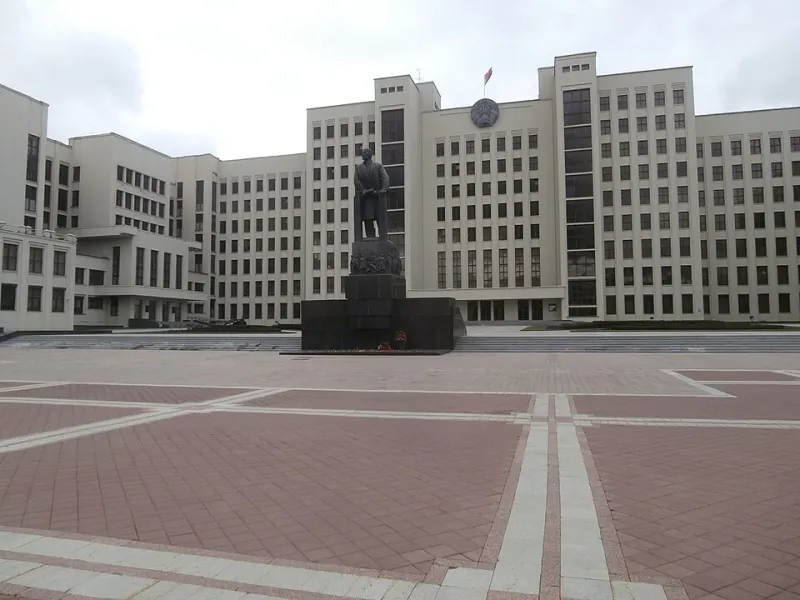
Red Lines and Tripwires: Five Scenarios That Could Pull Belarus Into the Fighting
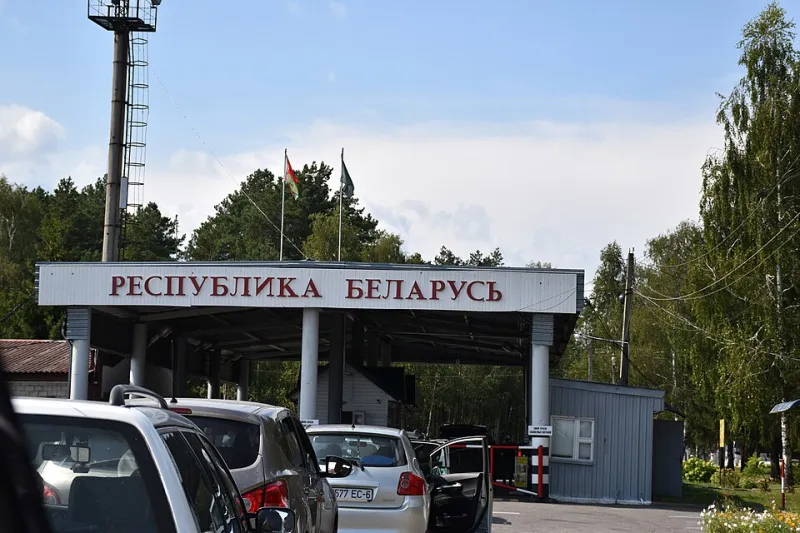
Photo: Vasyatka1, CC BY-SA 4.0, via Wikimedia Commons
More than two years into the full-scale invasion, one question continues to surface in NATO briefings and Pentagon assessments alike: will Belarus join the war?
So far, the answer has been no. Belarusian forces have not fired shots across the border in any sustained or official capacity, despite Minsk hosting Russian troops, missiles, and aircraft since 2022. But 'so far' is doing a lot of work in that sentence. The conditions that keep Belarus on the sidelines are conditional, and several plausible triggers could upend them. Below are the five scenarios defense analysts consider most credible — and the warning signs that would precede each.
1. A Staged Incident on the Border
The classic playbook. A manufactured provocation — shelling attributed to Ukrainian forces, a sabotaged border post, an alleged incursion — could provide Lukashenko with the pretext for a 'limited response.' Belarusian state media has periodically aired claims of Ukrainian provocations along the frontier, priming the domestic audience for exactly this kind of narrative.
Warning signs: Sudden surges in Belarusian state media coverage of alleged Ukrainian border violations; evacuation or restriction of access to specific border districts; unusual activity by Belarusian special-purpose forces rather than conventional units.
2. Escalating Russian Pressure
Moscow has repeatedly leaned on Minsk to commit troops, and Lukashenko has repeatedly resisted. But if Russia's position in the war deteriorated sharply — or if the Kremlin offered a package of security guarantees and economic relief too significant to refuse — the calculus could shift. A Russian security crisis inside Belarus itself, real or engineered, is another lever Moscow could pull.
Warning signs: Large-scale Russian troop rotations into Belarus under the cover of joint exercises; abrupt changes in the Union State's military integration agreements; Lukashenko statements that harden noticeably in tone after previously resisting entry.
3. A Ukrainian Strike Inside Belarusian Territory
Perhaps the most dangerous pathway is also the most accidental. Ukrainian forces have a legitimate right to strike Russian military assets wherever they are launched from — and Russian aircraft, drones, and missile systems operate from Belarusian soil. A Ukrainian strike that caused significant Belarusian civilian casualties, even if aimed at Russian assets, could generate domestic and Kremlin pressure for retaliation.
Warning signs: Patterns of long-range drone and missile launches from Belarusian territory intensifying; Ukrainian strikes edging closer to populated areas; Belarusian air-defense activity spiking along the frontier.
4. The Wagner Precedent, Revisited
The 2023 Prigozhin mutiny and the subsequent relocation of Wagner fighters to Belarus demonstrated how quickly non-state armed actors can complicate the region's security picture. A resurgent proxy force based in Belarus — or a Russian irregular contingent operating semi-independently from its territory — could drag Minsk into confrontation without any formal decision to fight.
Warning signs: New training-camp construction at sites previously associated with Wagner; irregular fighters appearing near the Ukrainian or Polish borders; friction between Belarusian regular forces and Russian-aligned paramilitaries.
5. A Union State Integration Milestone
The slow-motion merger of Russian and Belarusian militaries under Union State frameworks continues document by document. A formal agreement that placed Belarusian forces under a joint command structure — or a crisis that triggered the union's collective-security provisions — could make Belarusian participation less a choice than a contractual obligation Lukashenko can no longer wriggle out of.
Warning signs: Ratification of new joint-defense documents by the Belarusian parliament; Belarusian units participating in Russian operational planning exercises; movement of Belarusian brigade-level formations toward deployment areas.
What US and NATO Analysts Are Watching
American and allied intelligence agencies track these indicators through satellite imagery, signals intelligence, and open-source monitoring — commercial satellite photos of Belarusian airfields and depots are combed regularly, and social media posts by conscripts have repeatedly flagged movements before official confirmation.
The consensus view in Washington remains that Belarusian entry is unlikely but not impossible, and that the most probable route is not a deliberate decision by Lukashenko but a slide — an incident, a miscalculation, a pressure point applied too hard. That distinction shapes NATO's posture: the alliance's reinforced eastern flank exists precisely because escalation by accident is as dangerous as escalation by design.
For now, the tripwires hold. But everyone watching the border understands that in this war, red lines have a way of moving.