The Price of Proximity: How Insurers Quietly Put Belarus on the War Map
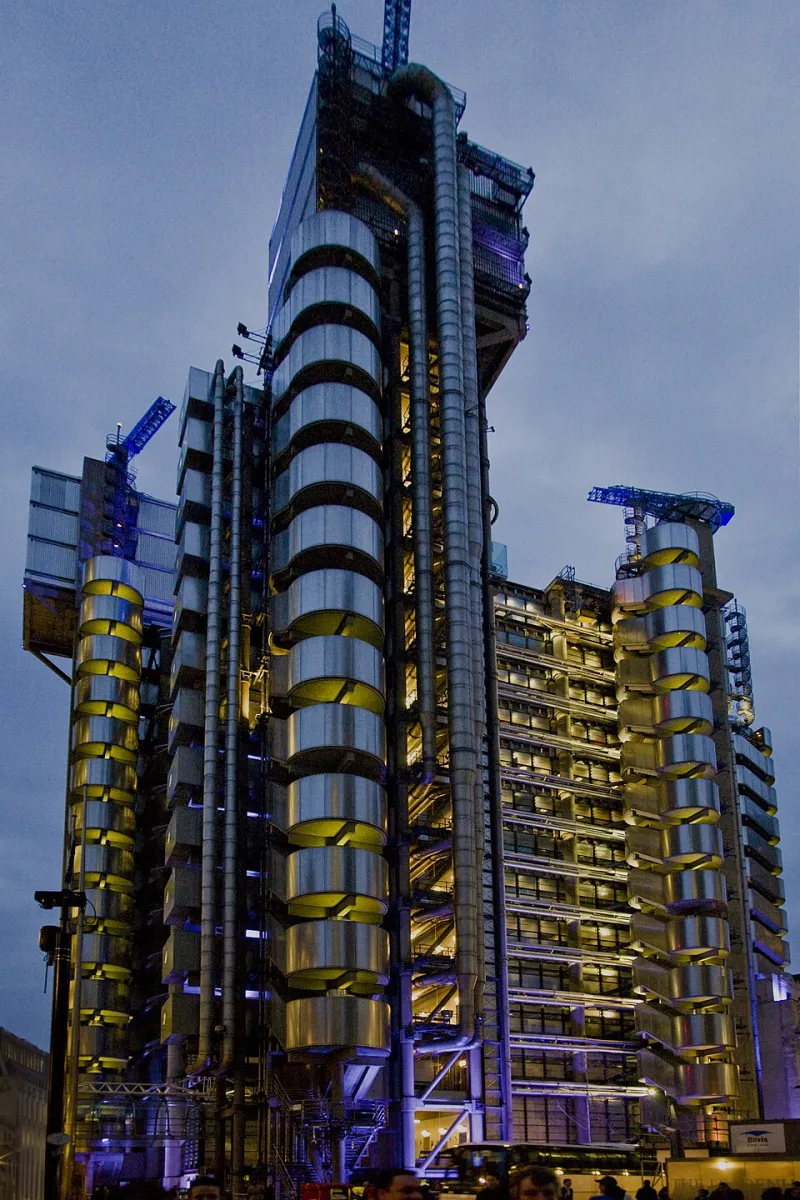
Photo: Lloyd's of London, CC BY 2.5, via Wikimedia Commons
Ask most Americans what Belarus has to do with their lives, and the answer is usually a shrug. Ask an underwriter at Lloyd's of London the same question, and you'll get a rate card.
Somewhere between the actuarial tables and the exclusion clauses, the world's insurance industry has made a quiet judgment: Belarus is not a neutral country at peace. It is a staging area adjacent to a war, and it is priced accordingly. That judgment — never announced, never debated at a kitchen table in Ohio — ripples outward into shipping costs, airfares, crop prices, and the fine print of your next overseas travel policy.
The Clause Nobody Reads
Open the terms of most international cargo policies issued since February 2022 and look for the war-risk exclusions. Belarus now appears alongside Russia, Ukraine, and a handful of sanctioned territories as a named jurisdiction — a place where hull damage, cargo seizure, or detention is presumed uninsurable without special cover.
The logic is straightforward, even if the mechanics are not. Insurers do not wait for missiles to fly before repricing risk; they price intent and proximity. Belarusian territory has hosted Russian forces, served as a launch corridor for strikes on Kyiv in the war's opening days, and continues to function as a forward logistics platform for Moscow. Underwriters read that as exposure, regardless of whether Minsk's own troops ever cross the border.
The result is a two-tier world. Cargo moving through Gdansk or Gdynia sails under standard rates. Cargo with a final destination in Minsk, or a routing that transits Belarusian rail and road corridors, gets quoted separately — if it gets quoted at all.
Reinsurance: Where the Real Decisions Happen
The visible insurance market is only the storefront. Behind it sits the reinsurance layer — the global risk wholesalers, many of them Bermudan, Swiss, and German, that ultimately absorb catastrophic losses. It is here, in annual renewals and confidential treaty negotiations, that Belarus's status is truly set.
Since 2022, major reinsurers have systematically carved Eastern European war risk out of broader property and catastrophe treaties. National insurers across NATO's eastern flank — Poland, the Baltics, Romania — have been forced into state-backed war risk pools to fill the vacuum. Those pools are subsidized by taxpayers, which means the cost of Minsk's alignment with Moscow is partly socialized onto European budgets, and indirectly onto the American multinationals operating there.
This is the hidden subsidy of the war: no one invoices it, but everyone pays it.
The Aviation Premium
Nowhere is the pricing more visible than in the sky. Belarusian airspace has been closed or effectively avoided by Western carriers since 2021, when the Ryanair Flight 4978 diversion to Minsk prompted EU sanctions and route cancellations. But the financial consequence extends beyond the detour.
Airline war-risk premiums — the annual policies covering hulls against conflict damage — jumped severalfold after the invasion, with underwriters treating the entire Belarus-Russia-Ukraine arc as a single hazard zone. Carriers flying routes from Chicago to Delhi, or Frankfurt to Seoul, now thread a wider corridor around the region, burning more fuel and adding crew hours. Those costs are embedded in every transcontinental fare. The traveler booking a flight from New York to Tokyo is, in a tiny and untraceable way, paying a Belarus risk premium.
Farm Country Feels It Too
Belarus was once a significant global exporter of potash fertilizer — a commodity that American farm cooperatives watch as closely as rainfall. Sanctions on Belaruskali, and the insurance and shipping complications that followed, removed a major supplier from the market just as Russia's own exports came under scrutiny. Potash prices spiked in 2022, and while they have since retreated, the episode demonstrated how a landlocked country most Americans couldn't place on a map can move the input costs of the soybean and corn belts.
Insurance sits upstream of all of it. When underwriters won't cover vessels calling at Russian ports that handle Belarusian transshipment, that trade doesn't vanish — it migrates to shadow operators charging more, and the margin gets passed down the commodity chain.
A Neutral Country Priced as a Belligerent
Minsk insists it is not a party to the war. Legally, that claim has held; Belarusian forces have not fought in Ukraine. But insurance markets do not adjudicate legal technicalities. They price behavior, and Belarus's behavior — hosting forces, permitting launch corridors, rewiring its economy around sanctions evasion — has been priced as participation.
There is a lesson in that for policymakers in Washington. Financial and commercial isolation of the kind insurers impose is often more durable than formal sanctions, because it persists in contracts and rate tables long after headlines fade. Belarus has been quietly de-risked out of the global system not by executive order, but by a spreadsheet.
For American businesses, the practical guidance is unglamorous: know your supply chain's geography, read the exclusions, and assume that any routing touching Belarus carries a premium you'll never see itemized. For everyone else, it's a reminder that the war next door is already in the price of things — just never on the receipt.