From Minsk to the Midwest: The Quiet Resettlement of Belarus's Software Engineers
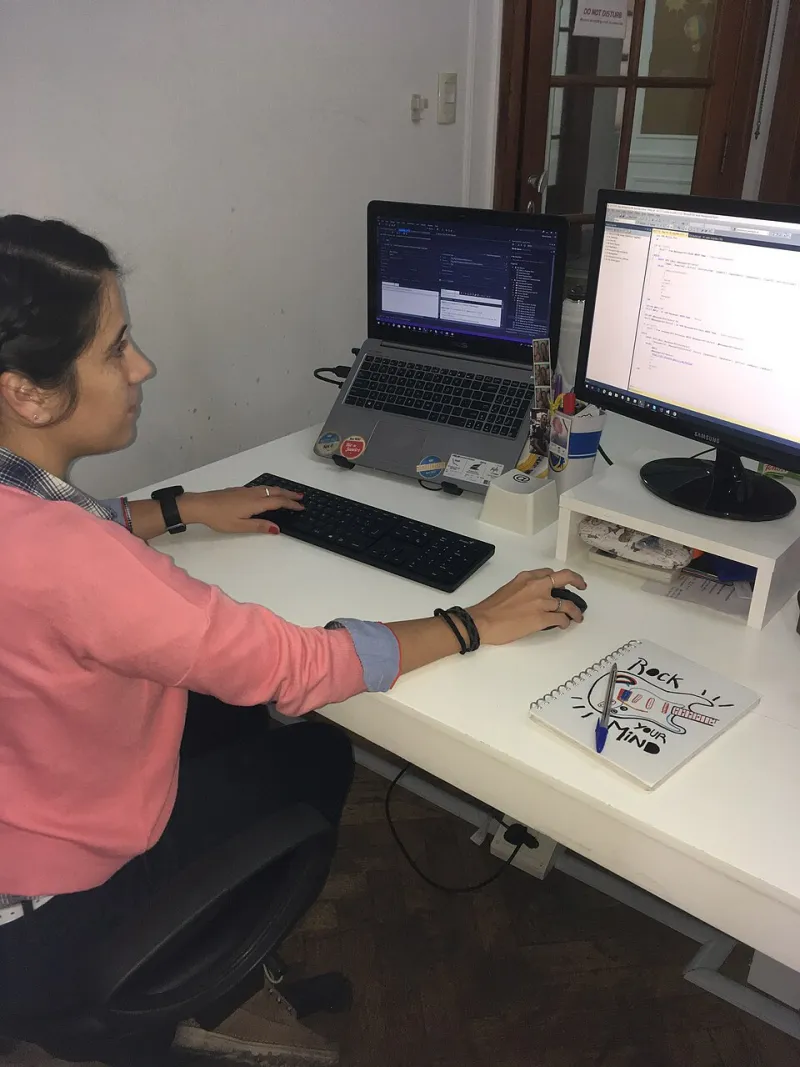
Photo: Cheluliada, CC BY-SA 4.0, via Wikimedia Commons
The office park outside Naperville, Illinois, does not look like a front line. Yet scattered across the cubicles and coffee shops of Chicago's western suburbs, and in smaller clusters around Boston, the Bay Area, and the Research Triangle, thousands of Belarusian software engineers are quietly rewriting the story of their country's most celebrated industry.
They did not come for adventure. Most came because staying had become untenable — after the 2020 crackdown on protesters, after the war next door made their passports liabilities, and after Western clients began asking uncomfortable questions about where their code was written.
The Industry That Was Supposed to Save Belarus
For two decades, Belarus's Hi-Tech Park was the regime's favorite showpiece. Tax breaks lured outsourcing giants and startups alike, and by 2020 the sector employed roughly 100,000 people and generated more than a billion dollars in annual exports. Lukashenko's government liked to boast that its programmers were the country's second great natural resource.
Then came the disputed election, the beatings in the streets, and the arrests of developers who had merely donated to opposition candidates or joined a strike chat. Thousands left in the first wave — mostly to Poland, Georgia, and Armenia. The war in Ukraine triggered a second exodus, and a third followed when Western sanctions began squeezing the logistics that Belarusian IT firms depended on.
What remains in Minsk is a shell of the ecosystem: fewer clients, older tools, and a workforce increasingly ordered to stay put by a state suspicious of anyone with a laptop and a visa.
Life in the Second Wave
The engineers now settling in the American Midwest are largely the second and third wave — people who first fled to Warsaw or Tbilisi, ran out of savings or patience, and eventually secured the visa lottery, an H-1B sponsorship, or a graduate program that led to a green card.
In the Chicago area, home to one of the largest Belarusian communities in the United States, the newcomers are distinctive. Unlike the postwar émigrés who built churches and dance ensembles on the Northwest Side, these arrivals are young, highly paid, and politically scarred. Many watched friends go to prison. Some will not post on social media under their real names.
Their integration is pragmatic rather than sentimental. They join softball leagues through work, not heritage societies. They argue about Illinois property taxes on group chats in Belarusian. And they send money home — carefully, through channels that will not trip sanctions — to parents in Hrodna and Mahiliou.
What Washington Is Missing
US policymakers have spent four years focused on Belarus as a security problem: a staging ground for Russian forces, a sanctions workaround, a border pressure point on the Polish frontier. All of that matters. But almost no one in Washington is tracking the demographic hemorrhage now underway.
The numbers are stark. Independent estimates suggest Belarus's IT workforce has shrunk by a third or more since 2020. The people leaving are not just coders — they are the founders, managers, and English-speaking bridge-builders who connected a small country to global markets. Replacing them will take a generation, if the political conditions ever allow it.
For the United States, this is an unqualified talent windfall. Every Belarusian engineer who lands in Illinois or North Carolina is a skilled worker, a taxpayer, and usually a ferociously motivated one. Immigration skeptics should note that these are people who chose America after living under the alternative.
But there is a strategic dimension the talent argument misses. A Belarus emptied of its independent professionals is a Belarus easier for Moscow to absorb — economically, digitally, and psychologically. The brain drain that benefits American companies today weakens the very constituency for a sovereign, post-Lukashenko Belarus that Washington says it wants tomorrow.
The Long Game of Exile
The engineers themselves think about this more than their new employers realize. In Chicago-area meetups organized through Telegram channels, the recurring question is not whether to return, but what will be left to return to. A few are quietly building things — open-source projects, remittance networks, documentation of what the regime destroyed — designed to outlast the current government.
History offers a precedent. The émigrés who fled Soviet repression in the twentieth century seeded the professional classes that eventually rebuilt independent states in Eastern Europe. Exile, in that framing, is not abandonment. It is deferred investment.
For now, though, the story unfolds in unremarkable places: a standup meeting in Naperville, a Saturday school where children learn Belarusian letters they may never use at home, a wire transfer that crosses three jurisdictions to reach a grandmother in Brest.
The war next door made Belarus famous for the wrong reasons. Its quietest export — the people who once coded its future — may end up being the most consequential thing the country sends abroad.