When the Palace Doors Open: Washington's Unfinished Homework on a Post-Lukashenko Belarus

Photo: Wilfredor, CC BY-SA 3.0, via Wikimedia Commons
Here is an uncomfortable exercise for the reader: try to recall a single major American policy paper, congressional hearing, or think tank report from the past two years devoted seriously to the question of what happens when Alexander Lukashenko exits the stage. Not the war in Ukraine. Not Wagner's wanderings. The man himself — seventy years old, in power since 1994, the last dictator in Europe by the shorthand American editorial writers love. The silence is not neutrality. It is a planning gap, and gaps like this one have a way of filling themselves at the worst possible moment.
Scenario One: The Negotiated Transition
The most benign path runs through elite bargaining. Lukashenko, his health failing or his Kremlin patrons withdrawing their insurance, cuts a deal: immunity and exile, perhaps in Russia or somewhere further afield, in exchange for a managed handover. Think of the broad contours of transitions the region has seen before — not the Prague of 1989, but something closer to a corporate succession with tanks parked outside.
American readiness: C-minus. Washington has sanctions architecture and a democratic opposition it recognizes, in the form of the structures around Sviatlana Tsikhanouskaya. What it lacks is a defined end-state: what does the US actually want from a transitional Belarus, and what is it willing to pay? Without that, negotiation support defaults to whatever the EU, Turkey, or the Kremlin can arrange — and the Kremlin will arrange for itself.
Scenario Two: The Hardliner Takeover
Now the colder version. Lukashenko is removed not by negotiation but by the security services he spent decades cultivating — the KGB of Belarus, the internal troops, the siloviki who have profited from repression and know exactly what a democratic transition means for their futures. A successor from within this circle preserves the machinery of control, loosens nothing, and competes for Moscow's favor by offering more, not less.
American readiness: D. This is arguably the scenario Washington is least equipped for, because it looks deceptively like the status quo. A new face at the palace, the same arrests, the same closed borders. The temptation will be to treat it as continuity and move on. But a hardliner regime fighting for legitimacy is more dangerous, not less — more dependent on Russia, more willing to grant basing rights, more likely to let the war next door bleed across its territory in exchange for survival.
Scenario Three: Absorption
The scenario Kyiv fears and Minsk's independence-minded public dreads: no successor at all. The Kremlin decides that a rudderless Belarus is a problem better solved than managed, engineers or simply welcomes annexation by stages — the union-state rhetoric made flesh, the way Crimea went from 'self-determination' to federal subject within a week.
American readiness: incomplete, at best. The US response to Crimea in 2014 was sanctions after the fact. Repeating that pattern with a country of nine million people on NATO's doorstep, bordering three alliance members, would be a strategic failure measured in decades. Deterrence here means signaling now — publicly and privately — that absorption triggers consequences planned in detail, not improvised in a White House Situation Room session already consumed by the latest Ukrainian front-line crisis.
The Homework Assignment
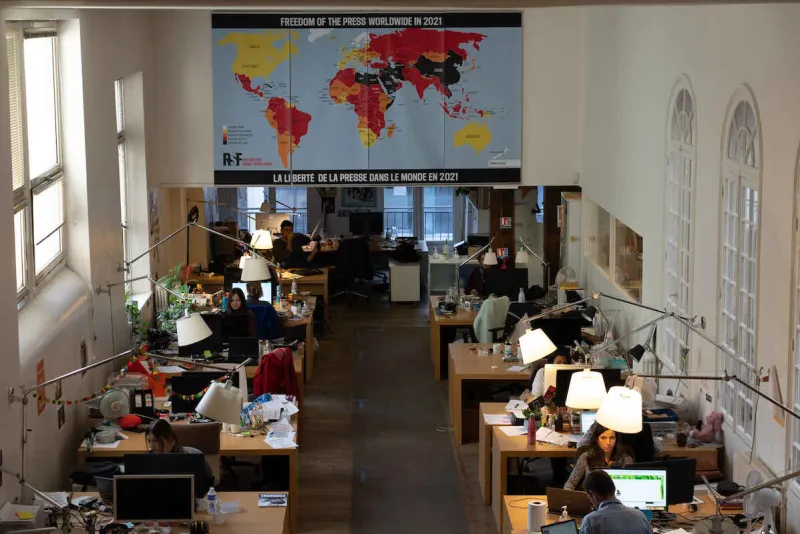
What would seriousness look like? Three concrete steps for the next administration. First, a standing interagency Belarus cell — not a working group that meets quarterly, but a desk with authority, staffed by people who speak the language and know the difference between Homel and Hrodna politics. Second, pre-authorized sanctions relief pathways tied to verifiable benchmarks, so that a transitional government has something to reach for besides gratitude. Third, sustained funding for independent Belarusian media and civil society, not as a gesture but as infrastructure — because every post-authoritarian transition in modern memory has depended on someone being able to broadcast a credible alternative on day one.
Lukashenko has outlasted four American presidents. He will not outlast time. The only question is whether Washington does its homework before the exam, or after.