Static Across the Border: The Exile Journalists Beaming Uncensored News Back to Belarus — and Into Ukraine

Photo: Radiobroadcastcenter, CC BY-SA 3.0, via Wikimedia Commons
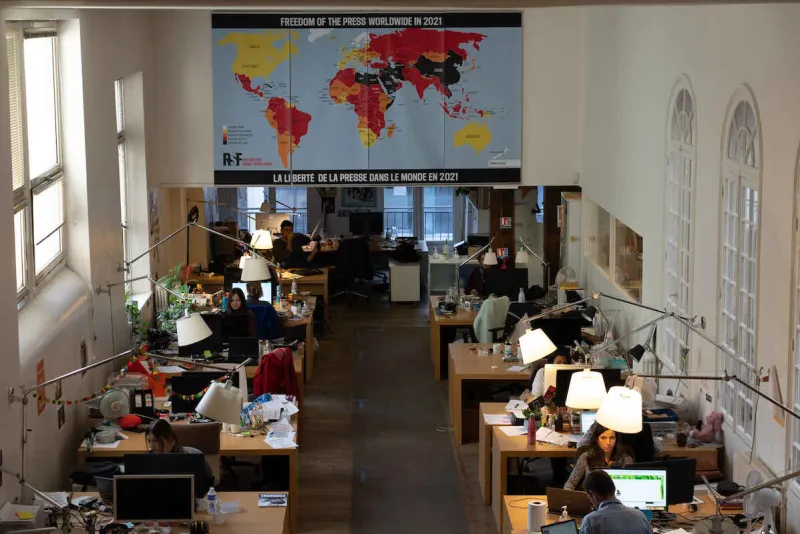
In an unmarked office building in Vilnius, a small team of Belarusian journalists edits footage of Russian missile strikes that their audience back home is not supposed to see. Their outlet was designated 'extremist' by Minsk years ago; opening its Telegram channel on a work phone in Belarus is, technically, a crime. Yet the reporting travels anyway — through VPNs, smuggled SIM cards, and a diaspora that has become the country's alternative press corps.
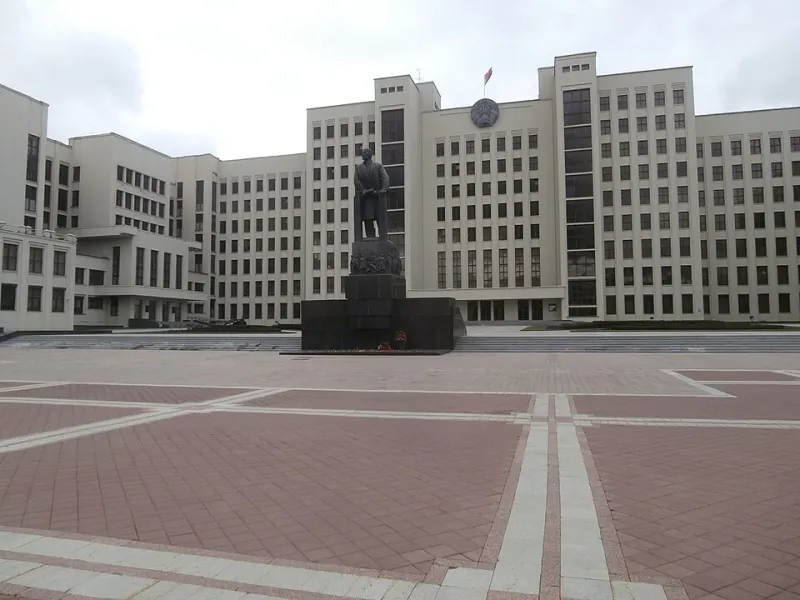
For American readers accustomed to a noisy but open media environment, it is worth pausing on what a closed one looks like. Belarus ranks near the bottom of global press freedom indices, and since 2021 virtually every major independent outlet has been liquidated, exiled, or both. What remains inside the country is a state apparatus that frames the war in Ukraine as a 'special military operation' provoked by the West, while insisting that Belarusian territory is not a party to the conflict — even as Russian forces launched the 2022 assault on Kyiv from Belarusian soil.
The Exile Newsroom as a Front Line
The reporters producing this coverage did not choose exile so much as have it chosen for them. After the contested 2020 election and the crackdown that followed, outlets like those now operating from Vilnius and Warsaw saw their editors jailed, their newsrooms raided, and their bank accounts frozen. Today they operate under foreign registration, funded largely by Western grants and reader donations, producing video explainers, Telegram threads, and radio programming designed for an audience that must consume them covertly.
The work is part journalism, part logistics. Teams maintain networks of stringers inside Belarus who file under risk of detention. Broadcasts are beamed in via shortwave-adjacent formats and streaming apps that Minsk periodically attempts to throttle. A single investigation into Belarusian military logistics supporting Russian operations can take months to verify because the sources must be protected not just from embarrassment but from prison sentences measured in years.
How Minsk Fills the Airwaves
The state's counter-programming is relentless and, by some measures, competent. State television depicts Ukraine as a territory overrun by NATO proxies, and President Alyaksandr Lukashenka as the sole guarantor that Belarusian soldiers will not die in someone else's war. It is a message calibrated to a population that is deeply wary of the conflict: polls and refugee flows alike suggest most Belarusians oppose direct participation.
That tension is precisely why the information battle matters. The Kremlin needs Belarus as a stable rear area — a source of territory, training grounds, and munitions transit. Lukashenka needs a narrative that lets him host Russian forces while telling his citizens they are staying out of the fight. Independent journalism threatens both propositions at once, by documenting what Belarusian territory is actually being used for.
Why Washington Should Pay Attention
For US policymakers, the exile media ecosystem is not a humanitarian side story; it is a strategic asset. Belarusian-language reporting is often the earliest public indicator of Russian force posture in Belarus — the arrival of new equipment, the activation of reserves, the movement of aircraft toward the Ukrainian border. During the 2022 battle for Kyiv, and again during Wagner's 2023 arrival, open-source and exile reporting provided warning that official channels lacked.
Sustaining that ecosystem is comparatively inexpensive against the scale of US security assistance in Europe. It also serves a longer game: a documented, independent record of what occurred in Belarus during the war will matter enormously in any post-Lukashenka reckoning, much as archived reporting shaped accountability debates in the Balkans.
The Battle for Belief
None of this guarantees an audience. Years of repression have driven fear deep into Belarusian society, and some citizens have simply disengaged from politics altogether. But the exile outlets persist because the alternative is silence — and silence, in an information war, is a concession. Every broadcast that crosses the border carries a simple proposition: that Belarusians are entitled to know how their country is being used in the war next door. As long as the fighting continues along Ukraine's northern border, that proposition will remain worth defending — and worth funding.