Grounded Corridor: How Minsk's Closed Skies Quietly Raise Your Airfare and Stretch NATO's Budget
Photo: Murgatroyd49, CC BY-SA 4.0, via Wikimedia Commons
For most American travelers, Belarus is an abstraction — a country whose name surfaces only in briefing headlines. Yet every time a United Airlines flight to Delhi or a Delta codeshare to Seoul swings hundreds of miles off its optimal path, there is a reasonable chance the detour traces back to Minsk.
Since early 2022, Belarusian airspace has been closed to most civil aviation and increasingly saturated with military activity tied to the war in Ukraine. What was once one of the busiest transit corridors between Europe and Asia has become a no-go zone. The ripple effects reach far beyond Eastern Europe — and they land, in tangible ways, on American consumers and the Pentagon's allies.
A Corridor That Vanished
Before the war, Belarusian airspace handled a steady stream of long-haul traffic connecting European hubs with East and South Asia. It was geographically almost unavoidable: a flat, well-managed stretch of sky between the Baltic states and Ukraine.
That corridor is now effectively gone. Western carriers avoid it not only because of the formal closure but because of what the closure conceals — heightened military aviation, air defense deployments, and a documented pattern of GPS interference. Airlines do not publish risk memos about specific countries, but their route maps tell the story plainly. Flight-planning software simply routes around Belarus, the way it routes around conflict zones everywhere.
The added distance is not trivial. A Chicago-to-Delhi or New York-to-Tokyo routing that must bend south around both Russian and Belarusian airspace can burn tens of thousands of extra dollars in fuel per flight. Multiply that across a carrier's weekly schedule and the arithmetic becomes uncomfortable.
Who Pays the Tab
Economists call it cost pass-through, and American travelers know it by a simpler name: higher fares. Fuel surcharges, longer block times, and reduced scheduling flexibility all feed into the price of a transpacific ticket. US carriers — barred from Russian and Belarusian airspace since 2022 — compete against Chinese and Gulf carriers that still enjoy shorter routings across Siberia. That asymmetry puts American airlines at a structural disadvantage of several flight hours on key Asian routes, translating into tighter margins and, ultimately, pricier seats for passengers in Cleveland and Denver.
There is also a subtler cost: resilience. Longer routes mean more crew duty hours consumed, tighter turnaround windows, and less slack when weather or mechanical problems strike. Every mile of detour is a mile of fragility added to a system American travelers depend on.
The Gray Zone Above
Closure is only half the story. The other half is what aviation safety officials euphemistically call "GPS interference events" — jamming and spoofing that degrade navigation for civil aircraft well beyond Belarus's borders. Pilots flying near the Baltic states and the Belarusian frontier have reported navigation discrepancies serious enough to prompt procedural changes.
For US readers, the closest analogy is a highway where the lane markings occasionally lie to you. Commercial aviation is built on redundancy and pilot training, and no passenger has been harmed — but the margin for error narrows. The Federal Aviation Administration and European safety agencies have issued guidance; airlines have adjusted. The point is that an autocrat's decision to militarize his airspace has exported risk onto flight decks operated by airlines that never overflew Belarus at all.
The NATO Bill
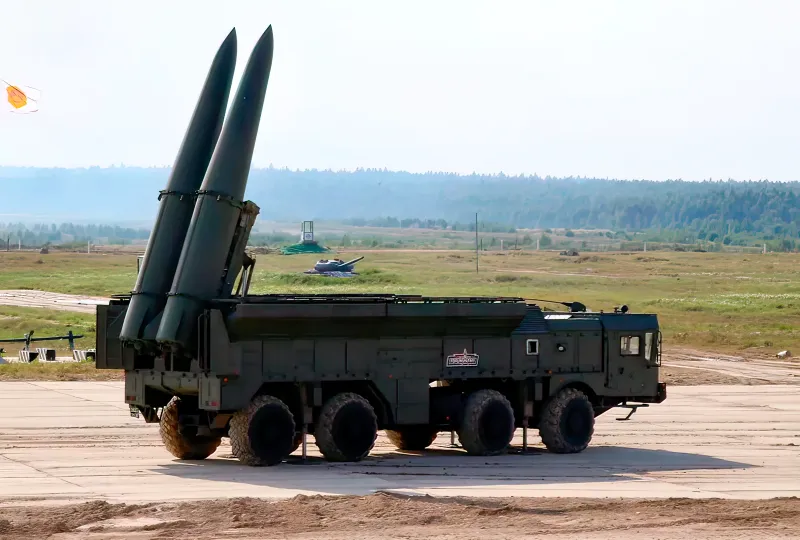
Then there is the security ledger. With Belarus hosting Russian tactical aircraft and serving as a launch platform for strikes against Ukraine, NATO's eastern flank has thickened its air-policing posture. Baltic air policing rotations, expanded surveillance flights, and enhanced radar coverage all cost money — much of it contributed by the alliance's largest shareholder, the United States.
American policymakers sometimes frame support for Ukraine as a distant investment. But the closed skies over Belarus are a standing reminder that the costs of the war already arrive on American shores, in airline balance sheets and alliance budgets alike. A reopened, de-militarized Belarusian corridor would be worth real money to global aviation — one more quiet reason why what happens in Minsk belongs on Washington's agenda, not just Kyiv's.