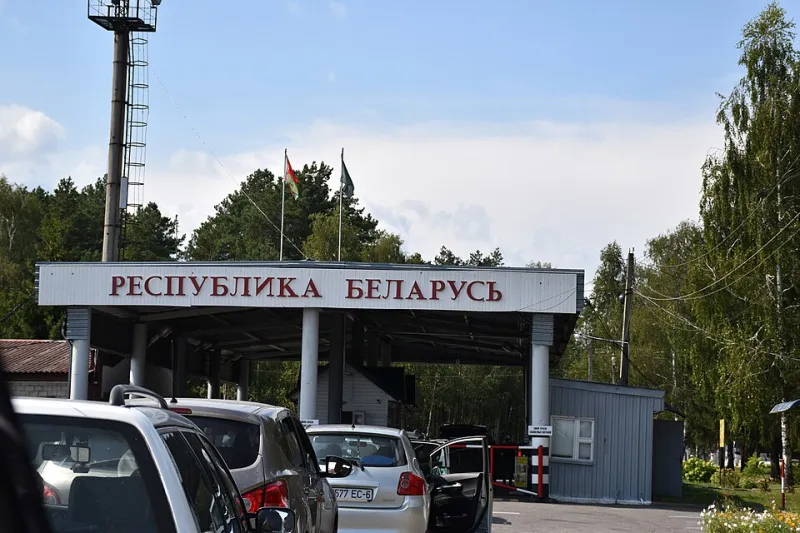
A Frontier Held Hostage to Caution: Mapping the Frozen Line Between Minsk and Kyiv
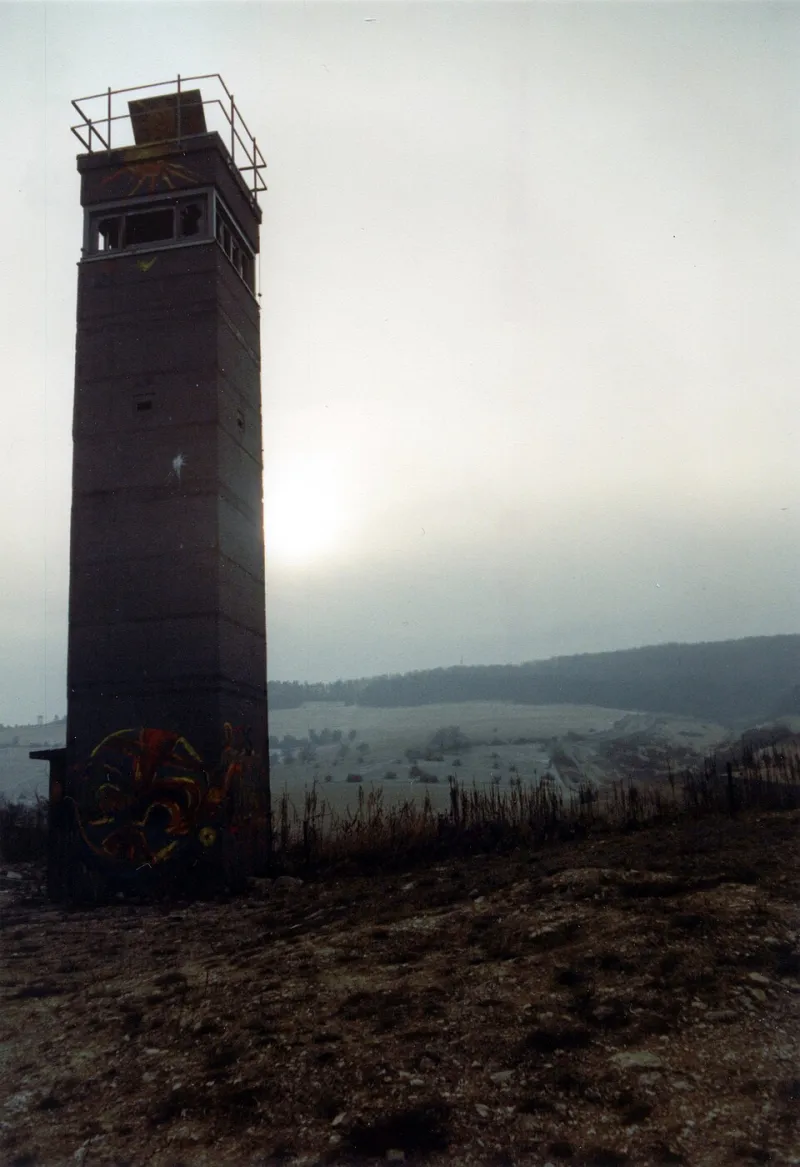
Photo: Ruhrfisch, CC BY-SA 3.0, via Wikimedia Commons
Wars tend to spread. Borders that begin as lines on a map become corridors for invasion, sabotage, and escalation. Yet the frontier separating Belarus from Ukraine has defied that logic. Since the spring of 2022, when Russian forces retreated from the approaches to Kyiv in disarray, the roughly 1,000-kilometer boundary between the two countries has been among the quietest stretches of terrain in Eastern Europe — even as fighting rages fewer than 200 kilometers to the south.
Understanding why that line holds requires looking past the rhetoric of both governments and examining the concrete military, political, and diplomatic architecture that has grown up around it.
Fortresses Facing Each Other Across Farmland
Neither side has treated the border as an afterthought. Ukraine began mining, trenching, and fortifying its northern approaches almost immediately after repelling the initial invasion, constructing defensive belts designed to make a second push toward Kyiv prohibitively costly. Ukrainian commanders have been explicit that the north is no longer the soft underbelly it was in February 2022.
Belarus, for its part, has concentrated forces along the frontier in ways that serve two audiences at once. For Moscow, the deployments signal solidarity and pin down Ukrainian units that might otherwise reinforce the eastern front. For a domestic and international audience, Minsk frames the buildup as purely defensive — a response to alleged Western and Ukrainian provocation. Western military analysts, including those at Washington-based think tanks, have repeatedly assessed that the Belarusian posture is optimized for signaling rather than combat.
The result is a paradox: two heavily fortified borders, neither of which either government appears to want to cross.
The Deterrence Math
For Belarusian leader Alexander Lukashenko, the calculus against direct involvement is straightforward. His armed forces — numbering in the tens of thousands of active personnel — are small, untested in large-scale combat, and deeply unpopular as a fighting force among his own citizenry. Entering the war would risk the collapse of an army he needs for internal control, ignite unrest at home, and expose his regime to the full weight of US and European sanctions currently reserved for Russia.
Kyiv's deterrence works in the other direction as well. Ukrainian officials have made clear that any attack launched from Belarusian territory would trigger a response against targets inside Belarus itself — including, potentially, infrastructure that Minsk cannot easily replace. In August 2024, Ukraine's commander-in-chief publicly confirmed that Ukrainian forces had repelled an incursion in the border region involving Belarusian and Russian units, a reminder that the frontier's quiet is enforced, not guaranteed.
Back Channels and Accidental Escalation
Beneath the deterrence sits a thinner layer of communication. Ukraine and Belarus maintain diplomatic missions in each other's capitals, and both sides have shown interest in preventing misunderstandings from spiraling. The border has seen periodic flare-ups — airspace violations, drone debris, alleged sabotage plots — that could, in a different political climate, have served as pretexts for wider conflict. That they have not suggests both governments see value in keeping grievances contained.
Washington has watched this dynamic closely. US officials have repeatedly warned Belarus against direct participation while simultaneously noting that the presence of Russian tactical nuclear weapons on Belarusian soil raises the stakes of any miscalculation along the frontier.
What the Quiet Tells Us
The stillness of the Belarusian border is often read as evidence of Lukashenko's weakness — a leader dragged to the brink by his patron and unwilling to go further. There is truth in that. But it also reflects something more durable: a mutual, unspoken recognition that a second front serves neither Minsk nor Kyiv, and that Moscow, for all its pressure, has not made opening one worth the cost.
For American policymakers, the lesson is that the frontier's stability is conditional, not permanent. It rests on deterrence that must be maintained, communication channels that must be preserved, and a Belarusian leader whose tolerance for risk has so far matched his appetite for survival. The line holds — but it holds by design, not by accident.