The Blue Book Exodus: Why Belarusians Are Handing Back Their Passports
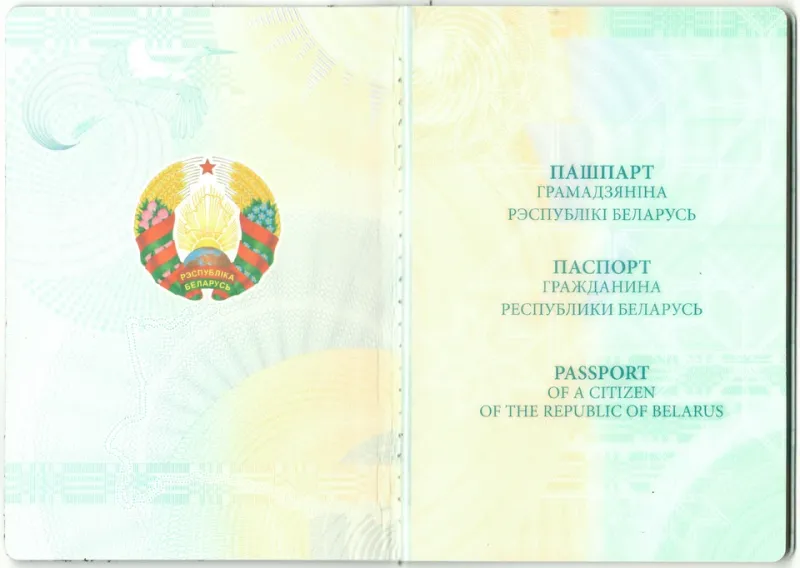
Photo: dunkaist, Public domain, via Wikimedia Commons
On a gray November morning in 2026, the line outside a Belarusian consular office in Warsaw moves slowly. Most people in it are not there to renew a passport. They are there to give one back.
The procedure has a bureaucratic name — renunciation of citizenship — but the people waiting describe it in plainer terms: cutting the last legal thread. They carry folders of documents, proof of another nationality, cash for fees, and, in many cases, a decade of ambivalence. The passport itself is a blue-covered reminder of a state that has spent years treating its citizens as subjects.
A Queue With No Official Count
No one publishes a reliable tally of Belarusians renouncing citizenship. Minsk does not advertise the numbers, and foreign embassies rarely discuss individual cases. But diaspora lawyers, consular staff, and community organizers across Europe and North America describe a steady rise since 2020, with a sharper uptick after Russia's full-scale invasion of Ukraine in 2022. By late 2026, the queue has become a fixture of Belarusian life abroad.
The reasons are not mysterious. Alyaksandr Lukashenka's government has jailed opponents, pressured independent media, and allowed Belarusian territory to serve as a launchpad for Russian military operations. For many Belarusians, the passport no longer feels like a shield. It feels like a liability — a document that ties them to a regime they did not choose and cannot change.
The Cost of Cutting Ties
Renunciation is not a click on a website. Applicants must usually travel to a consular office, prove they hold another citizenship or will not become stateless, pay fees, and wait. The legal consequences can include losing property rights, inheritance claims, and the ability to return without a visa. For older applicants, it can mean never seeing aging parents again. For younger ones, it can mean explaining to a future employer why there is a gap in their travel history.
The emotional cost is harder to file. Belarusian passports are not just travel documents; they are family records, school memories, and the small stamp that once made a person legible to the state. Surrendering one can feel like admitting that the country you left is not coming back.
Washington's Quiet Absorption
In the United States, the effects show up less in consular lines than in immigration paperwork. Belarusian asylum seekers in Chicago, New York, Cleveland, and other diaspora hubs are moving through asylum offices and immigration courts that are already stretched thin. Legal clinics run by diaspora groups report a rise in cases where renunciation documents, or the decision to renounce, become part of the evidence file.
That evidence cuts two ways. It can support an asylum claim by showing a genuine break with Minsk. It can also complicate a case if the applicant cannot prove statelessness or if the paperwork is incomplete. Immigration judges are not experts in Belarusian citizenship law, and the rules are not always clear. The result is a patchwork of outcomes that depends as much on the quality of legal help as on the facts.
Why the Trend Matters
Renunciation is a small signal, but it is a revealing one. A regime that cannot persuade its citizens to keep its passport is a regime with a shrinking future. The queue outside the consulate is not a protest. It is quieter than that. But it is a form of exit, and exit is one of the oldest measures of political legitimacy.
For Washington, the trend deserves more attention than it gets. It is a window into the mood of a diaspora that could be a valuable partner in any post-Lukashenko transition. It is also a warning about the limits of the current asylum system, which is absorbing a new wave of applicants without a clear strategy for processing their claims. And it is a reminder that citizenship itself has become a quiet front in the war next door — not a battlefield, but a place where loyalty, fear, and the future are being sorted one folder at a time.
Minsk may not publish the numbers. But the line keeps forming.